 Skip to content
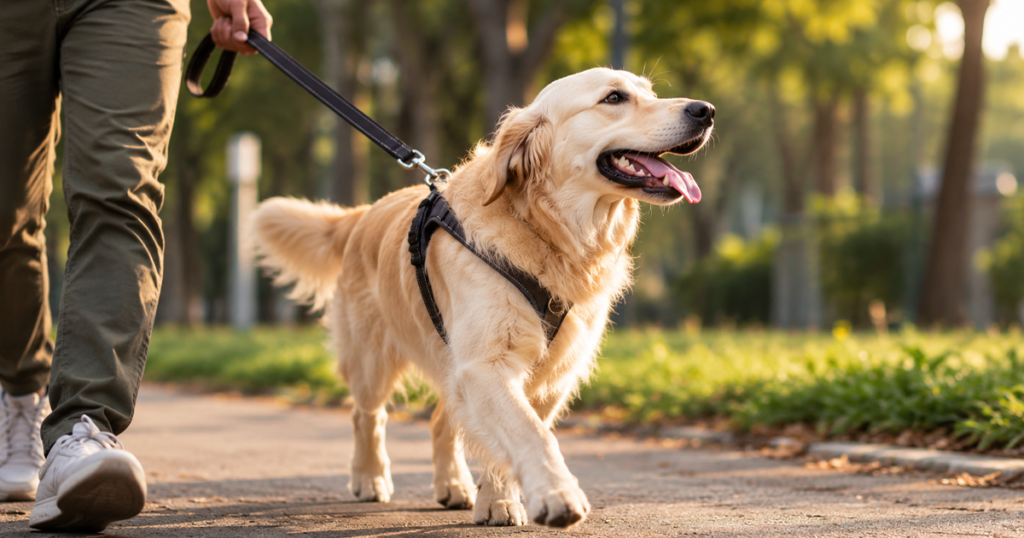
Dog leash training can make everyday walks calmer and more enjoyable for both you and your dog. If every walk starts with your dog rushing ahead, tightening the leash or pulling towards people, smells and other dogs, the problem is usually not stubbornness. Most dogs pull because moving forward is rewarding.
Good leash training for dogs is built on patience, clear feedback and repetition. The goal is not to keep your dog glued to your leg, but to build comfortable leash manners so your dog can explore without dragging you from one distraction to the next.
Why Dog Leash Training Starts With Understanding Pulling
A dog may pull because they are excited, anxious, following a scent or eager to greet someone. If pulling has worked before, your dog has learned a simple pattern: pull forward and eventually reach the reward.
Instead of allowing a tight leash to move the walk forward, reward attention, a relaxed leash and movement at a manageable pace. Leash training for dogs works best when everyone handling the dog follows the same rule.
How to Start Leash Training for Dogs
Begin somewhere quiet before practising on a busy street or around other dogs. Early dog leash training exercises should make it easy for your dog to succeed before you add harder distractions.
Build Attention Before Walking
Say your dog’s name, wait for a glance in your direction and reward that check-in. A dog that notices you is easier to guide when the environment becomes exciting, which gives leash training a stronger foundation.
Reward a Loose Leash
Start walking and reward your dog while the leash is relaxed. Treats, praise or permission to continue towards an interesting smell can all work as rewards. Loose leash walking does not require a perfect heel; your dog can sniff and explore as long as they are not pulling you forward.
During dog leash training, reward the behaviour while it is happening rather than after your dog has already reached the end of the leash.
Keep Sessions Short
Five focused minutes can be more useful than a long walk filled with frustration. Short sessions make leash training easier to practise regularly and help both you and your dog finish on a positive note.
How to Stop Dog Pulling on Leash
If your dog reaches the end of the leash and continues pulling, avoid turning the walk into a tug-of-war. Stop moving, wait for the leash to loosen or encourage your dog back towards you, then continue.
If you are wondering how to stop dog pulling on leash, consistency matters more than strength. Dog leash training becomes confusing when pulling sometimes gets the dog where they want to go and sometimes does not.
Practise Around Distractions
Dogs may walk well indoors and struggle around scooters, other dogs, children or strong smells. Start at a distance where your dog can notice the distraction without losing all focus, then reward calm attention.
This gradual approach makes leash training for dogs more useful in real life. As your dog improves, slowly practise closer to distractions.
Leash Training for Puppies and Adult Dogs
If you are learning how to train a puppy to walk on a leash without pulling, keep sessions short and make the leash, collar or harness part of positive experiences.
If you are wondering how to leash train an adult dog, the same reward-based approach can work; older dogs may simply need more repetition. Puppy training basics can also help build focus before outdoor walks become harder.
Common Mistakes in Dog Leash Training
A common mistake is expecting too much too quickly. Another is changing the rules from day to day. If one person allows pulling while another stops every time, progress is usually slower.
Leash training should include reinforcement for what is going well. Positive reinforcement makes the goal clearer without relying on force or intimidation.
If you want to understand how reward-based learning fits into a wider training approach, read more about positive reinforcement and other dog training methods.
Common dog training myths can also make owners expect progress too quickly.
When Dog Leash Training Needs Extra Support
Sometimes pulling is linked to fear, reactivity, frustration or difficulty coping around particular triggers. In those cases, professional training can help identify what is driving the behaviour.
Doggy Ville’s Dog Training programmes use positive, reward-based methods and include puppy foundations, obedience, behaviour-focused learning and agility.
If leash problems are strongly connected with anxiety, fear or more complex behaviour, a canine behaviourist may be the better next step. Doggy Ville’s behaviour therapy focuses on understanding triggers and underlying behaviour rather than only correcting the visible symptom.
Dogs that benefit from structured social interaction may also gain useful experience in supervised daycare environments.
Professional Dog Leash Training at Doggy Ville in Hyderabad
If you have searched for dog leash training near me because home practice is not enough, Doggy Ville offers professional training at its Gachibowli, Banjara Hills Road No. 11 and DLF locations. Its programmes focus on positive reinforcement, everyday behaviour, communication and confidence.
Leash training for dogs is most useful when those skills carry over into normal walks and new environments. Doggy Ville’s trainers work with different breeds, temperaments and learning styles, making the service a practical local option for Hyderabad pet parents who want structured guidance.
You can explore Doggy Ville locations to find the most convenient training centre near you.
If you have questions about training availability, your dog’s behaviour or which programme may suit them, contact the Doggy Ville team for guidance before booking.
Frequently Asked Questions
What is the fastest way to leash train a dog?
There is no reliable instant fix. The fastest progress usually comes from short, consistent sessions in low-distraction environments, rewarding a loose leash and preventing pulling from getting your dog where they want to go. Good leash training for dogs is built through repetition rather than rushing.
What is the 7 7 7 rule for dogs?
The 7-7-7 rule is commonly used as a socialisation guideline that encourages positive exposure to different people, places, surfaces and experiences. It is not specifically a dog leash training method, but gradual positive exposure can support confidence during future walks.
Is leash training good for dogs?
Yes. Leash training for dogs can improve safety, communication and everyday walking habits while still allowing dogs to sniff and explore. The aim is not to remove freedom but to make walks manageable for both dog and handler.
At what age should a dog be leash trained?
Puppies can begin getting comfortable with a collar, harness and leash through short, positive sessions when appropriate for their age and health. Adult dogs can also learn new leash habits, so dog leash training is not limited to puppyhood.
Build Better Walks With Doggy Ville
Dog leash training is about building communication, attention and a walking rhythm that feels comfortable for both of you. If walks have become frustrating or your dog struggles around everyday distractions, Doggy Ville can provide structured, reward-based guidance that helps you practise more confidently at home and outdoors.
Leash training for dogs becomes easier when the same skills are reinforced consistently between professional sessions and everyday walks.