 Skip to content
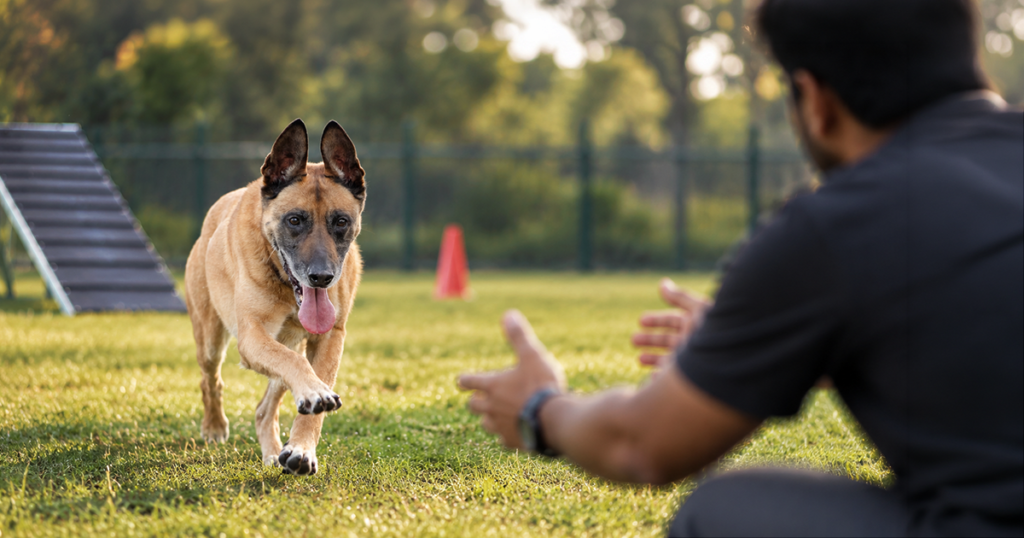
Dog recall training teaches your dog to return when called, even when something else seems more interesting. If you are learning how to teach a dog to come, the goal is not to shout the cue more firmly; it is to make returning to you clear, rewarding and worth repeating.
A reliable recall develops in stages. Start where your dog can succeed, then add distance and distractions gradually.
Dog Recall Training Starts With a Clear Cue
A recall command for dogs should be short, consistent and easy to recognise. “Come” is common, but the exact word matters less than using the same cue every time.
Avoid repeating the recall command again and again. Say it once, encourage your dog towards you and reward the return. Repeating “come” several times can teach a dog that the first cue is optional.
Build Dog Name Recall First
Dog name recall training can make the next step easier. Say your dog’s name and reward them for turning towards you. Once that check-in becomes reliable, pair it with your chosen dog recall command.
This foundation is especially useful for puppies or newly adopted dogs that are still learning to focus on their pet parent.
How to Teach a Dog to Come in Three Stages
Stage 1: Start in a Low-Distraction Space
Begin indoors or in a secure area with very little competing for your dog’s attention. Give the cue, move slightly away if needed and reward your dog as soon as they reach you.
At this stage, the first goal is not distance. It is helping your dog understand that returning quickly leads to something positive.
To understand why rewards are so useful during training, read about positive reinforcement and other dog training methods.
Stage 2: Add Distance Gradually
Once your dog responds nearby, increase the distance a little at a time. Recall training works best when the difficulty rises gradually rather than jumping from the living room straight to a busy park.
Sometimes call your dog back, reward them and release them again so recall does not always mean playtime ends. This simple dog recall training technique helps protect the value of the cue.
Stage 3: Practise Dog Recall Training With Distractions
Real recall becomes harder around other dogs, food, visitors, wildlife and interesting smells. Dog recall training with distractions should begin far enough away that your dog can still think and respond.
If the cue stops working, reduce the difficulty instead of repeating it. This is an important part of learning how to teach a dog to come reliably in real-world situations.
Use a Long Line Before Off-Leash Recall Training
A long training line gives your dog more freedom while providing a safety backup. Long line dog recall training can bridge the gap between indoor practice and larger outdoor spaces.
When using a long line, give your recall cue and encourage your dog back rather than using the line to pull them towards you. Dog off-leash recall training should come later, once the recall command is dependable in secure environments and around realistic distractions.
If you are training a younger dog, puppy training basics can also help build focus and name response before recall becomes more demanding.
Common Dog Recall Training Mistakes
One mistake is calling your dog only when something enjoyable is about to end. Another is punishing the dog after they eventually return. Reward the return itself, even if it took longer than you wanted.
Recall also becomes harder when different family members use different cues or expectations. Consistency gives your dog a clearer rule. If you are still figuring out how to teach a dog to come, focus on successful repetitions rather than repeatedly testing the cue in situations that are too difficult.
Some dog training myths can also create unrealistic expectations about how quickly a dog should learn or how obedience should be taught.
Recall Training for Adult and Older Dogs
Recall is not only a puppy skill. Adult dog recall training can be effective even when a dog has spent years ignoring a recall cue, although established habits may require more repetition.
Older dog recall training should take the dog’s mobility, hearing and energy level into account. The principle remains the same: make the cue clear, keep the reward worthwhile and practise at a difficulty the dog can manage.
When Professional Dog Recall Training Can Help
Home practice may stall when a dog becomes highly distracted outdoors, ignores recall around other dogs or struggles to focus in unfamiliar places.
Doggy Ville’s Dog Training programmes use positive, reward-based methods and include puppy foundations, obedience, behaviour-focused learning and agility. Structured training can help pet parents improve timing, choose appropriate rewards and gradually practise around more difficult distractions.
If recall difficulties are connected with fear, anxiety, aggression or another deeper behaviour concern, a canine behaviourist may be more useful than treating recall as an isolated obedience problem.
Where Recall Training Fits Into Doggy Ville’s Training Approach
Recall is rarely an isolated skill. A dog that comes back reliably also needs to notice their handler, respond to cues around distractions and learn that returning is worth more than continuing towards whatever has caught their attention.
Doggy Ville’s positive, reward-based dog training programmes work on these everyday skills through structured practice rather than expecting instant obedience.
For pet parents searching for dog recall training near me in Hyderabad, Doggy Ville offers professional training at its Gachibowli, Banjara Hills Road No. 11 and DLF facilities, alongside practice you can continue at home.
You can view the Doggy Ville training locations before choosing the most convenient facility.
Pet parents who want to understand more about Doggy Ville’s facilities, care philosophy and team can also read why families choose Doggy Ville.
Frequently Asked Questions
How to recall a dog that won’t listen?
Reduce the difficulty first. Move to a quieter area or increase the distance from whatever is distracting your dog. Use a reward your dog values and practise successful repetitions before trying the harder situation again. Dog recall training improves through achievable steps, not repeated failed cues.
How long does it take a dog to learn recall?
There is no fixed timeline. A dog may understand the basic cue quickly but need weeks or months of practice before responding reliably around distractions. How to teach a dog to come successfully depends on consistency, environment, reward value and previous learning.
How can I train my dog to recall with a long line?
Use a suitable long line in a secure practice area and allow some distance. Give the recall cue, encourage your dog towards you and reward the return. Increase distance gradually while keeping the line as a safety backup rather than using it to drag the dog back.
Which dog breeds have the best recall?
Breed tendencies can affect independence, motivation and focus, but reliable recall is not determined by breed alone. Individual temperament, reinforcement history and consistent dog recall training all matter.
Build a More Reliable Recall With Doggy Ville
A dependable recall grows from a clear cue, worthwhile rewards and practice that gradually becomes more challenging. If dog recall training is difficult to progress at home, Doggy Ville can help you build better focus and communication through structured, reward-based training.