 Skip to content

Why Is My Dog Afraid of Water? Causes, Signs & Ways to Help
Some dogs happily splash through puddles and swimming pools, while others become nervous at the sight of a bathtub. If your dog avoids water, backs away from a swimming pool, or trembles during baths, you may wonder what’s causing their discomfort.
Why is my dog afraid of water? Common reasons include unfamiliar sensations, negative past experiences, slippery surfaces, and a lack of positive exposure. Some dogs may also associate water with physical discomfort. Understanding these triggers can help you recognise their fears and respond without increasing their anxiety.
Why Is My Dog Afraid of Water? Common Causes
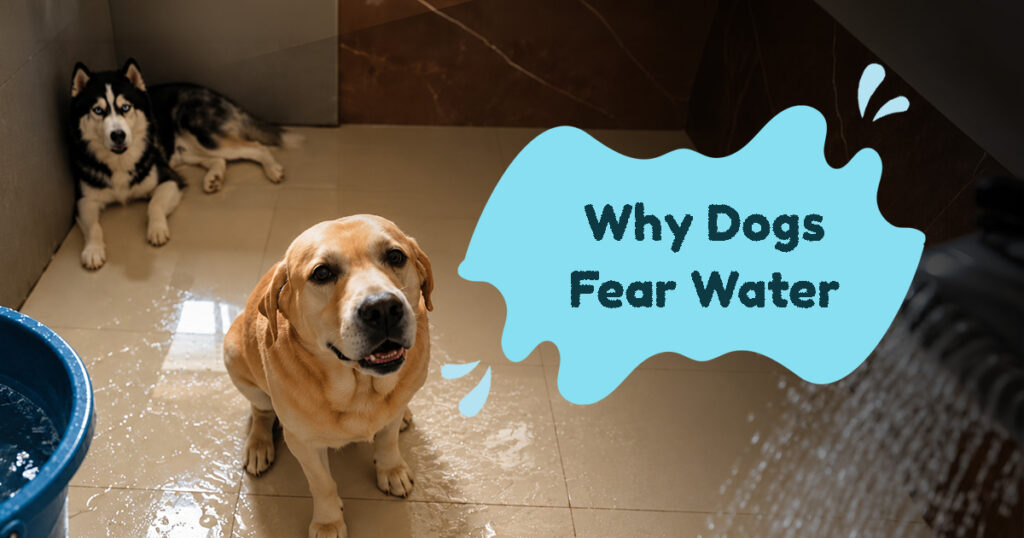
A dog afraid of water isn’t necessarily being stubborn. Water introduces unfamiliar sounds, temperatures, movements, and surfaces that some dogs find overwhelming.
Negative Experiences With Water
A frightening experience, such as slipping in a bathtub, falling into a pool, or being sprayed unexpectedly, can create a negative association.
Your dog may remember the discomfort and become reluctant to approach similar situations again, even when the environment is safe.
Lack of Early Exposure
Dogs that haven’t experienced water gradually and positively may find bathing or swimming unfamiliar.
Puppies benefit from gentle introductions to different environments, but adult dogs can also develop confidence through patient, reward-based experiences.
Unfamiliar Sounds and Sensations
Running taps, splashing water, wet fur, and slippery floors can overwhelm sensitive dogs.
Some dislike the sound of a showerhead, while others become uncomfortable when they lose their footing. These reactions explain why certain dogs enjoy rain but resist bathing.
Physical Discomfort or Health Concerns
Not every dog is naturally comfortable swimming. Body structure, mobility problems, pain, and breathing difficulties may influence their response.
If you’re asking why is my dog afraid of water after your pet previously enjoyed swimming or bathing, consider whether discomfort or illness could be responsible.
A veterinarian can help assess sudden behavioural changes.
How Can You Tell If Your Dog Is Scared of Water?
Recognising anxiety signals is essential before introducing any water-related activity.
A dog scared of water may display:
- Trembling, shaking, or excessive panting
- Backing away from bathtubs or swimming pools
- Tucking the tail or lowering the body
- Whining, barking, or attempting to escape
- Freezing or refusing to move
- Lip licking, pacing, or avoiding interaction
Some dogs become unusually quiet instead of displaying obvious panic.
Pay attention to your dog’s normal behaviour. Repeated avoidance or distress suggests that the experience may be uncomfortable rather than enjoyable.
Why Are Some Dogs Afraid of Baths but Not Swimming?
When pet parents ask, “Why is my dog afraid of water?”, they may actually be noticing fear of a particular activity.
Bathing and swimming involve different experiences.
During a bath, dogs may encounter slippery flooring, running water, grooming products, and unfamiliar handling. Swimming can offer greater freedom of movement when introduced in a suitable environment.
A dog afraid of water during bathing may still enjoy shallow-water play. Similarly, a dog comfortable with baths might hesitate around deeper pools.
Identifying the specific trigger helps you respond appropriately instead of assuming your dog dislikes all water activities.
How Can You Help a Dog Afraid of Water?
Helping a dog scared of water requires patience, a safe environment, and positive experiences.
Introduce Water Gradually
Start by allowing your dog to explore a dry bathroom or approach a pool from a comfortable distance.
Reward relaxed behaviour with treats, praise, or toys. Introduce water gradually, stopping whenever your dog shows signs of distress.
Create a Comfortable Environment
Use non-slip mats during bathing, maintain a comfortable water temperature, and avoid spraying water directly onto the face.
For swimming introductions, choose shallow areas with secure footing and accessible exits.
Use Positive Reinforcement
Reward your dog for approaching water voluntarily. Keep sessions short and allow them to move away when needed.
Never pull, push, or throw a frightened dog into water. Forced exposure can increase fear and create safety risks.
Prioritise Swimming Safety
Not every dog can swim confidently or safely. Supervise all water activities and consider a properly fitted canine life jacket where appropriate.
For additional information, read PetMD’s veterinary guidance on swimming and hydrotherapy.
Can Dogs Overcome Their Fear of Water?
Some dogs become more comfortable around water through gradual desensitisation and positive reinforcement.
However, progress depends on temperament, previous experiences, physical health, and the severity of their fear.
If your dog experiences intense panic, persistent avoidance, or sudden changes in behaviour, consult a veterinarian or qualified canine behaviour professional.
The goal isn’t necessarily to make every dog love swimming. It’s to help them feel safer during necessary activities such as bathing.
FAQs About Dogs Afraid of Water
Why Is My Dog Afraid of Water but Not Rain?
Your dog may associate baths or pools with uncomfortable handling, slippery surfaces, or unfamiliar sounds. Rain allows greater freedom of movement, making the experience different.
Is It Normal for Dogs to Be Afraid of Water?
Yes. Some dogs dislike water because of temperament, limited exposure, or previous experiences. However, sudden or severe fear may warrant veterinary attention.
Should You Force a Dog to Swim?
No. Forcing a frightened dog into water can worsen anxiety and increase injury risks. Gradual, voluntary introductions are safer.
Helping Your Dog Feel Comfortable Around Water in Hyderabad
Understanding why is my dog afraid of water helps pet parents recognise fear as a response to discomfort or uncertainty rather than disobedience.
With patience, familiar surroundings, and positive reinforcement, many dogs can develop greater confidence around water. Even small improvements can make everyday bathing and grooming less stressful.
At Doggy Ville, we offer dog swimming services and dog behaviourist therapy in Hyderabad. Our team can help pet parents explore suitable activities based on their dog’s comfort and individual needs.
Help your furry companion feel safer, one comfortable experience at a time.
For Gachibowli enquiries, call +91 8074532484 or connect with Doggy Ville on Instagram.