 Skip to content
Learning How to Train a Dog to Sit Starts with Patience and Consistency
One of the first skills many pet parents teach is how to train a dog to sit, and for good reason. Sitting is more than a simple trick; it’s a practical behaviour that helps your dog stay focused, encourages calm interactions, and lays the foundation for future training. Whether you’ve welcomed a playful puppy or adopted an older dog, beginning with a clear routine and positive reinforcement can make learning enjoyable for both of you.
The goal isn’t to make your dog obey instantly. It’s about building understanding through encouragement, repetition, and rewarding the behaviours you’d like to see more often.
Why “Sit” Is One of the Best First Commands to Teach
Teaching your dog to sit creates a starting point for many everyday situations. Once your dog understands this cue, it becomes easier to introduce other skills while encouraging good manners around people and new environments.
Learning to sit can also help before activities such as:
- Mealtimes
- Putting on a lead
- Greeting visitors
- Grooming sessions
- Crossing roads safely
- Beginning another training exercise
Like any new skill, progress comes gradually. Some dogs understand the cue quickly, while others simply need a little more time and repetition.
Before You Begin Training
A successful training session doesn’t require complicated equipment. Choosing the right environment often makes the biggest difference.
Before you start:
- Pick a quiet space with minimal distractions
- Keep a few small treat rewards ready
- Schedule short sessions when your dog is alert but relaxed
- Finish each session while your dog is still interested
Dogs generally learn better through several short sessions than one long training session.
Teaching Your Dog to Sit, One Step at a Time
Step 1: Capture Your Dog’s Attention
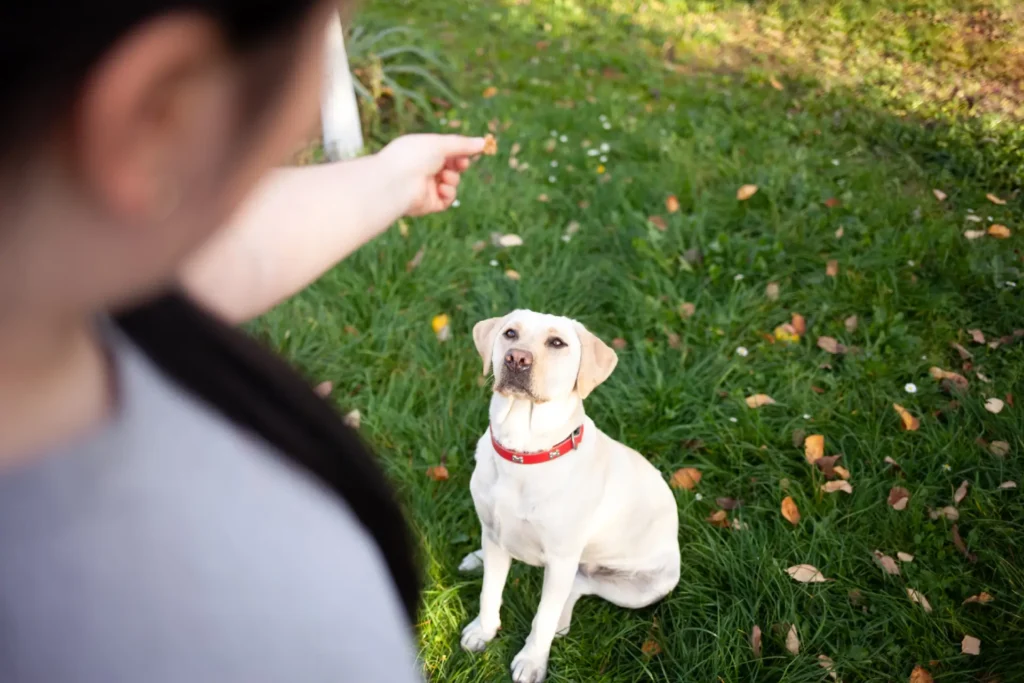
Hold a small treat reward close to your dog’s nose so they know you’re about to begin.
Allow them to focus on the reward before moving to the next step. There’s no need to rush—the calmer the beginning, the easier it becomes for your dog to stay engaged.
Step 2: Guide the Movement
Slowly move the treat upwards and slightly backwards over your dog’s head.
As their eyes follow the treat, they’ll naturally lift their head and often lower their hindquarters into a sitting position. The movement should feel gentle and natural rather than forced.
Avoid pushing your dog’s back or physically placing them into position. Allow them to discover the behaviour on their own.
Step 3: Reward the Sit Immediately
The moment your dog’s bottom touches the floor, offer the treat reward and praise them in a calm, encouraging voice.
Rewarding the behaviour immediately helps your dog understand exactly which action earned the reward. This is one of the key principles of positive reinforcement.
Step 4: Add the Verbal Cue
Once your dog begins sitting consistently, introduce the verbal cue “Sit.”
Say the word once, then guide your dog with the treat as before. After enough successful repetitions, your dog will begin connecting the spoken cue with the action.
Using the cue once is usually more effective than repeating it several times.
Step 5: Introduce a Hand Signal
Many dogs respond well to visual communication as well as spoken words.
Once your dog understands the verbal cue, begin pairing it with a simple hand signal cue. Using the same hand movement each time helps create consistency and makes communication easier in different environments.
Can Clicker Training Help?
Some pet parents choose to use clicker training alongside treats.
A clicker marks the exact moment your dog performs the correct behaviour, followed immediately by a reward. Over time, many dogs learn to associate the click with something positive, making it easier to identify successful behaviours during training.
Whether you use a clicker or simply praise your dog, consistency is what matters most.
Common Mistakes to Avoid
Learning takes time, so it’s completely normal if your dog doesn’t understand the cue straight away.
Try to avoid:
- Repeating the command several times
- Using very long training sessions
- Training when your dog is overly excited or tired
- Rewarding before your dog has fully sat
- Becoming frustrated if progress feels slow
Every dog learns at their own pace, and steady encouragement usually leads to better long-term results than rushing the process.
What Comes After “Sit”?
Once your dog responds confidently to “Sit,” you can gradually introduce other foundation skills.
Many pet parents continue with:
- How to train a dog to stay
- How to train a dog to lie down
- How to train a dog to shake hands
- How to train a dog his name
Teaching one behaviour at a time helps your dog build confidence while making each new lesson easier to understand.
Read more: Pet Boarding vs. Pet Sitting: Which is Best for Your Dog?
Building Good Habits Through Positive Training
Training isn’t simply about teaching commands; it’s about strengthening the relationship between you and your dog.
Short, enjoyable sessions help your dog stay motivated while building trust through positive experiences. Over time, these everyday interactions become part of a routine that encourages confidence, good manners, and clear communication.
Progress won’t always happen at the same speed, and that’s perfectly normal. Celebrating small improvements often leads to lasting success.
Helping Your Dog Learn With Confidence
Every dog learns differently, and a patient approach often brings the best results. At Doggy Ville – The Canine Club, we support dogs and their families through positive reinforcement training, behaviour therapy, cage-free boarding, professional grooming, agility activities, and pet wellness support — all centred around your dog’s comfort, happiness, and development.
Whether you’re introducing your dog’s first commands or building on existing skills, our experienced team is always here to offer thoughtful guidance and support.
Frequently Asked Questions
Why won’t my dog sit even when I have a treat?
Some dogs become so focused on the treat that they struggle to follow the movement, while others may be distracted by their surroundings. Try practising in a quiet space, use small treat rewards, and keep each session short and positive.
Can I teach “Sit” without using food treats?
Yes. While treat rewards can make learning easier in the beginning, many dogs also respond well to praise, toys, or a favourite activity. As your dog becomes more confident, you can gradually vary the rewards while continuing to reinforce the behaviour.
Should every family member use the same command and hand signal?
Yes. Using the same verbal and hand signal cues help avoid confusion and allows your dog to understand what’s being asked, regardless of who is training them.
What should I do if my dog stands up immediately after sitting?
Reward your dog as soon as they sit, even if they only hold the position briefly. As they become more confident, you can gradually increase the amount of time they remain seated before offering a reward.
What if my dog already knows “Sit” but doesn’t respond every time?
It’s common for dogs to respond differently depending on their surroundings. If your dog listens well at home but becomes distracted outdoors, continue practising in gradually busier environments while rewarding successful responses. Building reliability takes time and consistent practice.
When is the best time of day to practise training?
Many dogs learn best when they’re relaxed and not overly hungry or tired. Choose a time when your dog is naturally attentive, and keep sessions enjoyable rather than trying to fit in too much at once.
Can professional training help if my dog isn’t responding at home?
Sometimes a change of environment and guidance from experienced trainers can make a noticeable difference. Structured, positive reinforcement-based training can help dogs build confidence while giving pet parents practical techniques to continue at home.
Do training centres in Hyderabad and Vijayawada use positive reinforcement methods?
Training methods vary between providers, so it’s always worth asking about their approach before enrolling your dog. If you’re looking for dog training in Hyderabad or Vijayawada, choose a centre that focuses on positive reinforcement, patient guidance, and building a strong relationship between dogs and their families.
How can I help my dog stay interested in training?
Keep sessions short, celebrate small successes, and finish on a positive note. Consistency, encouragement, and realistic expectations help training remain an enjoyable experience for both you and your dog.
Find Your Nearest Doggy Ville
Wherever you are, compassionate canine care is never far away. Connect with your nearest Doggy Ville location below.
📍Banjara Hills | +91 73865 32484